
 Español
 Portugues
 Pусский
 Français
 Deutsch
 日本語
日本語 한국어
한국어 العربية
 Italiano
 Nederlands
 Polski
 ไทย
ไทย Türk dili
 हिन्दी
 Indonesia
 Melayu
 Tiếng Việt
 čeština
 Română
High pressure check valve for rocket engine
A high-pressure check valve for a rocket engine is a critical fluid control component designed to allow propellant or pressurant flow in one direction while preventing reverse flow under extreme operating conditions. In rocket propulsion systems, even a small amount of backflow can cause serious performance loss, destabilize combustion, damage pumps, or create unsafe pressure transients. For this reason, the check valve must be highly reliable, fast-acting, and able to withstand severe temperature, vibration, and pressure environments.The primary function of a high-pressure check valve is to protect the integrity of the propulsion feed system. It is commonly installed in lines carrying oxidizer, fuel, helium, or other pressurizing gases. During engine start, shutdown, or pressure fluctuations, the valve automatically opens when upstream pressure exceeds a set cracking pressure and closes immediately when reverse pressure appears. This passive operation makes it especially valuable in systems where electronic or mechanical actuation may be limited.Because rocket engines often operate at very high pressures, the valve body and internal components must be manufactured from materials with excellent strength, corrosion resistance, and thermal stability. Stainless steel, Inconel, titanium alloys, and other high-performance metals are often selected depending on the propellant compatibility and service temperature. Internal sealing elements may use advanced polymers or metal-to-metal sealing designs, depending on whether the application involves cryogenic liquids, hot gases, or aggressive chemicals.The design of the valve must also minimize pressure drop to avoid reducing system efficiency. A well-engineered check valve balances low flow resistance with rapid sealing performance. Engineers carefully optimize the poppet, spring, seat geometry, and flow path to ensure stable operation under dynamic conditions. In some designs, the spring assists closure to prevent chatter or leakage; in others, the fluid force alone is sufficient to drive the valve element.Another important consideration is cleanliness and contamination control. Rocket propulsion systems are highly sensitive to particles, residues, and machining debris. Even a tiny contaminant can prevent full sealing or cause internal wear. Therefore, high-pressure check valves for rocket engines are often produced and assembled under strict cleanliness standards, followed by rigorous inspection, leak testing, and pressure qualification.These valves must also endure repeated thermal cycling, especially in reusable launch systems. Rapid transitions from ambient conditions to cryogenic temperatures or intense heat can cause material contraction, expansion, and fatigue. To address this, designers evaluate coefficient of thermal expansion, seat wear, seal compression, and long-term durability.In summary, a high-pressure check valve for a rocket engine is a precision-engineered safety and performance component. Its role in preventing reverse flow, maintaining system stability, and operating reliably under extreme conditions makes it essential to modern propulsion systems.
Products
Category:
-
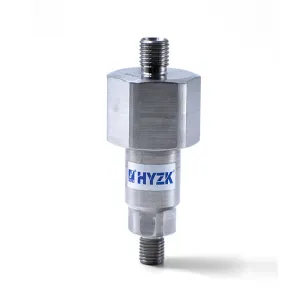
High pressure check valve for rocket engine
Category: Safety Valve / Check ValveBrowse number: 407Number:Release time: 2026-10-23 17:14:20Valve Body Material: GH4169 GJB713-89/06Cr19Ni10/14Cr17Ni2
Sealing Material: GH4169 GJB713-89/PTFE/NBR
Working Medium: Gas, Liquid
-
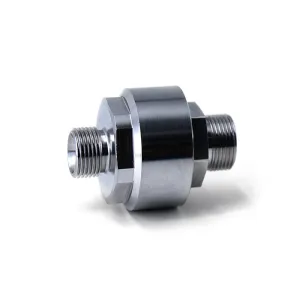
High pressure check valve for rocket engine
Category: Safety Valve / Check ValveBrowse number: 391Number:Release time: 2026-10-23 17:15:16Valve Body Material: 06Cr19Ni10/GH1469 GJB713-89
Sealing Material: Polytetrafluoroethylene (PTFE)
Working Medium: Gas, Liquid
News
Category:
No search results found!
Case
Category:
No search results found!
Video
Category:
No search results found!
Download
Category:
No search results found!
Job
Category:
No search results found!
Featured Products
No search results found!



 WhatsApp
 Phone
Phone